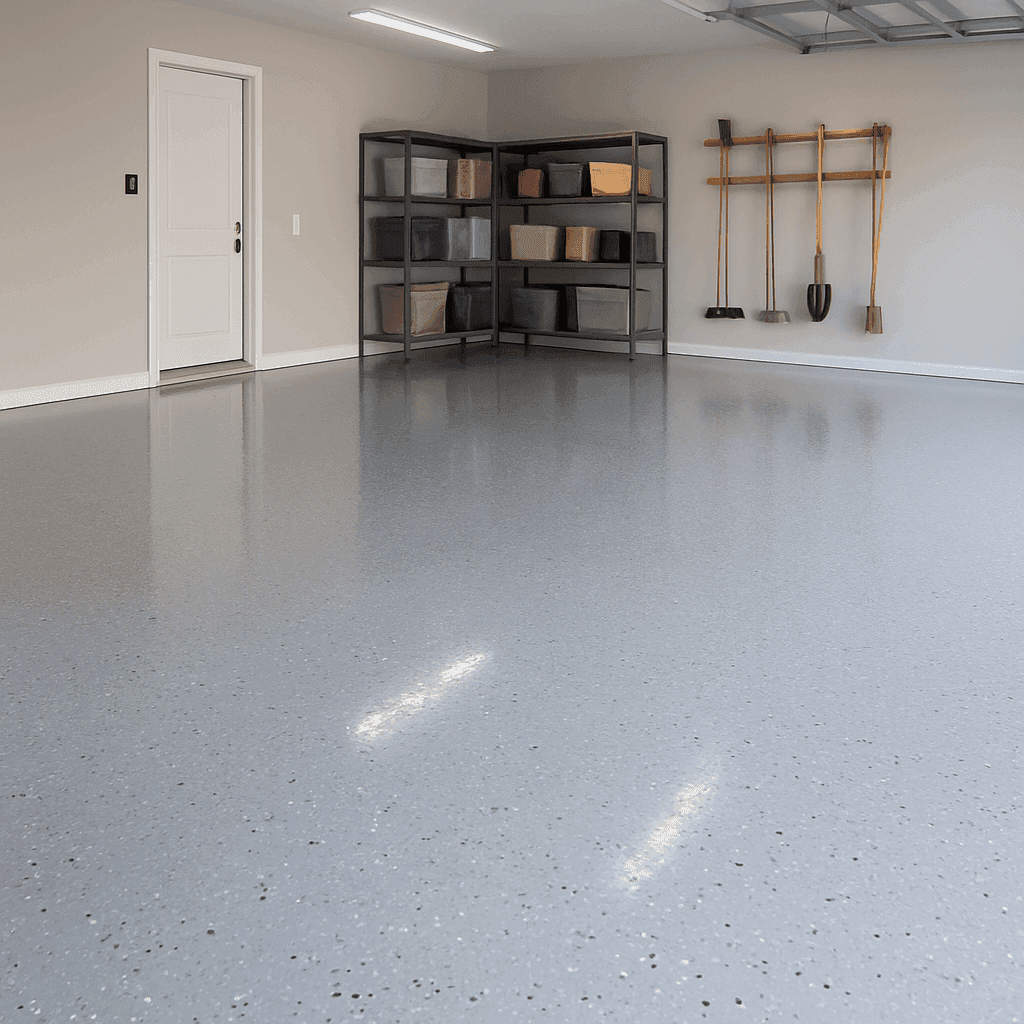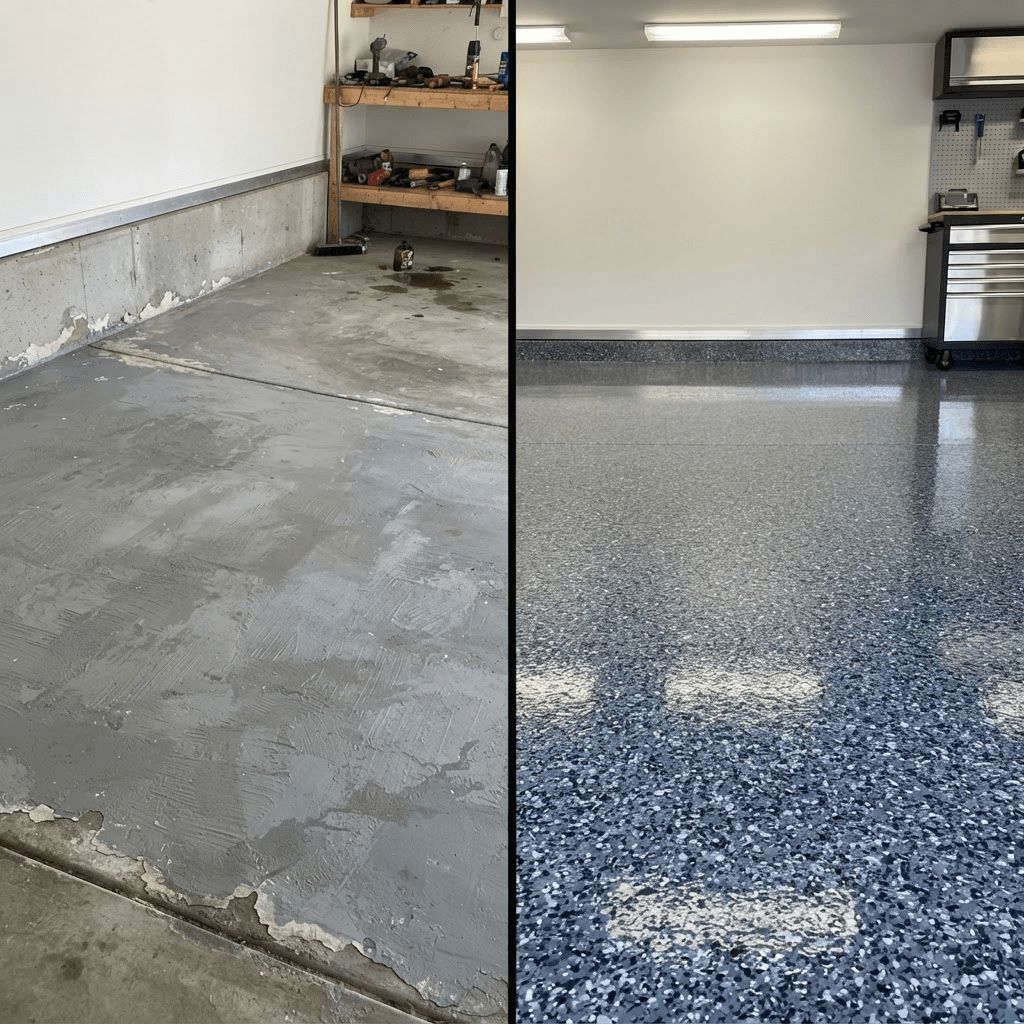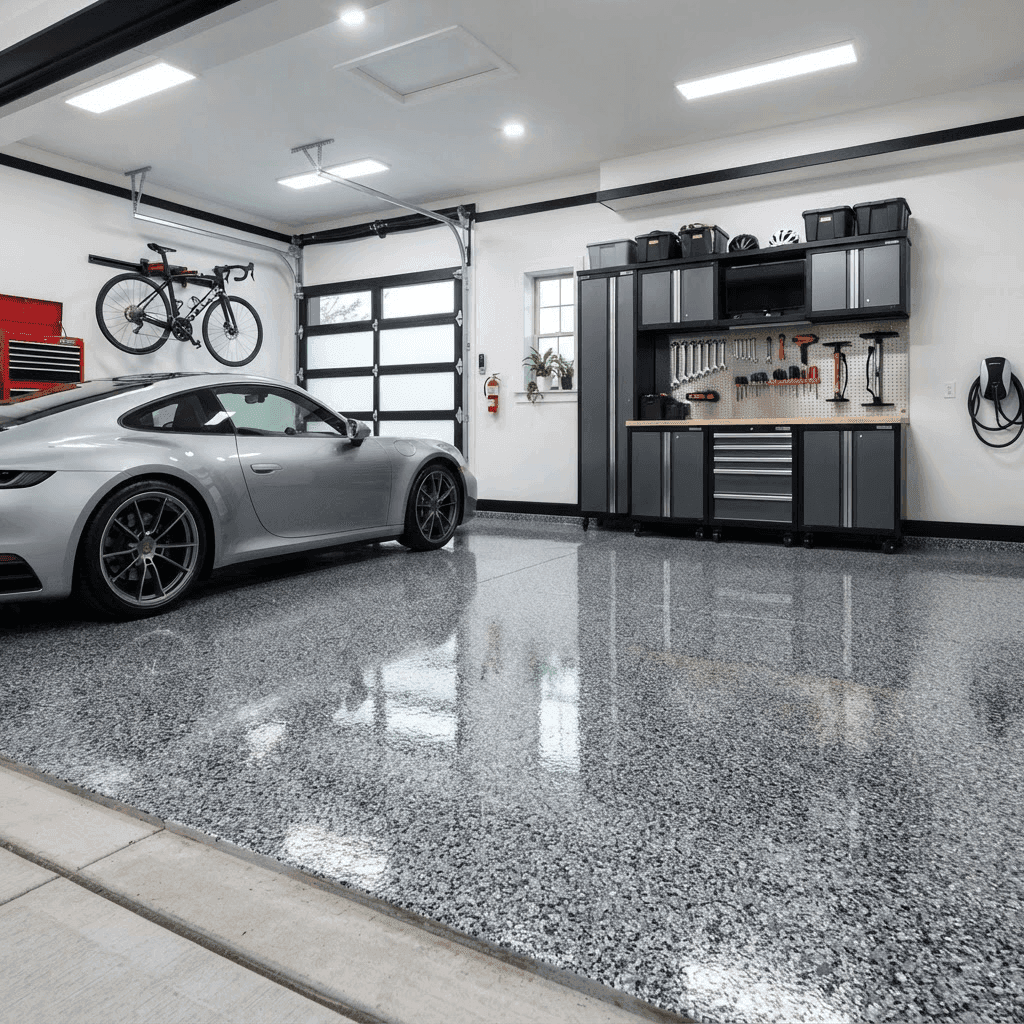
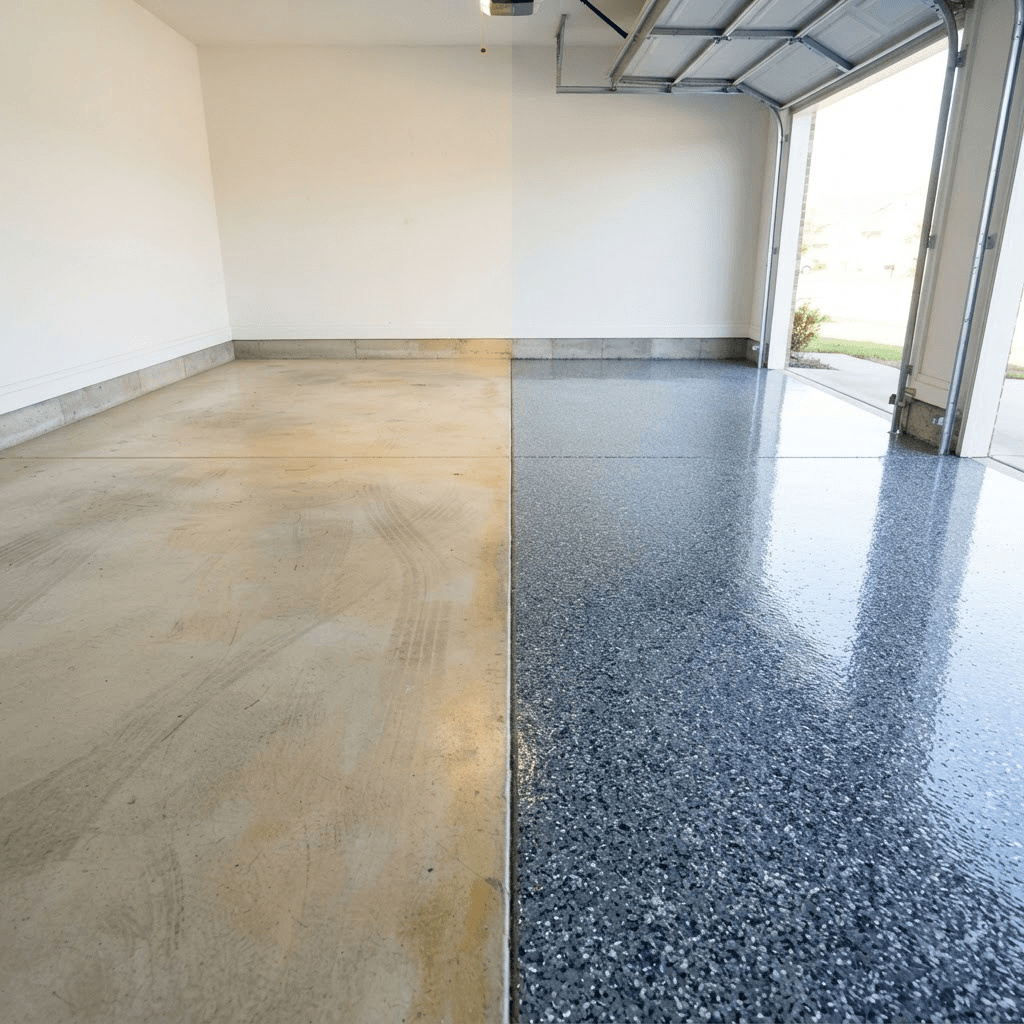
Quick answer:For most Houston garages, polyaspartic is the better coating. It's UV-stable so it won't yellow, it tolerates Houston's concrete moisture and humidity far better than epoxy, it cures in one day instead of three, and it lasts 10–15 years versus 5–10 for standard epoxy. The trade-off is cost: polyaspartic runs roughly $7–$11 per square foot installed versus $5–$7 for epoxy — about 30–60% more. Epoxy still makes sense for budget projects, interior spaces with no UV exposure, and thick decorative builds like metallic floors.
If you're comparing quotes for a garage floor coating in Houston, you've probably noticed the price gap between the "epoxy" bid and the "polyaspartic" bid and wondered whether the premium is real value or an upsell. This guide breaks down exactly how the two chemistries differ, what each one costs in Houston in 2026, and why Houston's humidity — more than almost any other factor — should drive your decision.
Epoxy vs Polyaspartic at a Glance
| Factor | Epoxy | Polyaspartic |
|---|---|---|
| Cost (installed, per sq ft) | $5 – $7 | $7 – $11 |
| Two-car garage total | $2,250 – $3,150 | $3,150 – $4,950 |
| Lifespan | 5 – 10 years | 10 – 15 years |
| UV stability | Yellows in sunlight | UV-stable, won't yellow |
| Humidity / moisture tolerance | Sensitive — needs under 4% slab moisture | Tolerant of higher moisture |
| Cure time (vehicle traffic) | 24 – 72 hours | 24 hours |
| Installation time | 2 – 3 days | 1 day, most garages |
| Application temp range | 55 – 90°F | 30 – 140°F |
| Flexibility | Rigid — can crack with slab movement | Flexible — resists cracking |
| Thickness per coat | Thicker builds possible | Thinner per coat |
| Best for | Budget projects, metallic floors, interiors | Houston garages, patios, anywhere with sun and humidity |
The one-sentence version: epoxy is the budget-friendly workhorse, and polyaspartic is the coating engineered for exactly the conditions Houston throws at a floor.
What's the Difference Between Epoxy and Polyaspartic?
What is epoxy?
Epoxy is a two-part thermosetting coating — a resin and a hardener mixed on site that chemically bond to prepared concrete. It's been the standard garage floor coating for decades because it's affordable, builds thick, adheres extremely well to properly prepared concrete, and resists oil, gasoline, and most household chemicals.
Its weaknesses are chemical, not cosmetic. Epoxy is UV-sensitive — it yellows and chalks with sun exposure — and moisture-reactive during application. Both problems matter more in Houston than almost anywhere else in the country.
What is polyaspartic?
Polyaspartic is a fast-curing aliphatic polyurea, a newer-generation chemistry originally developed for bridge and industrial coatings that had to survive weather extremes. It cures fast, stays flexible, doesn't yellow in sunlight, and can be applied across a much wider range of temperature and humidity conditions.
Most premium "one-day garage floor" systems advertised in Houston are polyaspartic: prep, base coat, decorative chip broadcast, and clear top coat completed in a single day, with your car back on the floor in 24 hours.
The hybrid approach many pros use
Many professional installers — including Houston Superior Painting on select projects — use an epoxy or polyaspartic base coat with a polyaspartic top coat. The base coat provides adhesion and build; the polyaspartic top coat provides the UV stability, chemical resistance, and wear surface. You get most of polyaspartic's benefits at a price between the two systems.
Why Houston's Climate Changes the Answer
In Denver or Phoenix, epoxy vs polyaspartic is mostly a budget question. In Houston, it's a failure-risk question. Two local conditions stack the deck against standard epoxy.
1. Concrete moisture and humidity
Epoxy requires concrete moisture below roughly 4% and ambient humidity below about 85% during application. Houston's average humidity runs 75–85% year-round, and slab concrete here holds ground moisture even when it looks bone dry. Apply epoxy over damp concrete and you get blushing — hazy white discoloration — then bubbling, and eventually delamination. That failure shows up in 6–18 months and can't be spot-repaired. The whole floor has to be stripped and redone.
Polyaspartic formulas tolerate significantly higher concrete moisture content, which removes the single biggest cause of coating failure in the Houston market. A professional installer should still moisture-test the slab either way, with a calcium chloride kit or an in-slab relative humidity probe — not a visual check.
2. UV exposure
Houston garages with windows, glass door panels, or doors that stay open catch enough UV to yellow an epoxy floor within a few years, especially in lighter colors. Polyaspartic is aliphatic and UV-stable, so it holds its color and gloss. For patios, pool decks, and any exterior concrete, polyaspartic isn't just better — epoxy is the wrong product entirely.
3. Heat
Summer slab temperatures shorten epoxy's working time and can cause outgassing bubbles as air expands out of hot concrete. Polyaspartic's wider application window — roughly 30–140°F — makes summer installs far more forgiving. Heat cuts both ways, though: polyaspartic's already-fast set time gets faster in a 100°F garage, which is one more reason this is a professional-application product.
Epoxy vs Polyaspartic Cost in Houston TX — 2026
| System | 1-Car (200–300 sq ft) | 2-Car (400–600 sq ft) | 3-Car (600–900 sq ft) |
|---|---|---|---|
| Basic epoxy, single color | $2,200 – $2,400 | $2,250 – $3,300 | $3,300 – $4,900 |
| Epoxy full chip / flake system | $2,200 – $2,800 | $2,800 – $4,200 | $4,200 – $6,300 |
| Polyaspartic chip system | $2,200 – $3,300 | $3,150 – $4,950 | $4,900 – $7,700 |
| Metallic epoxy | $2,400 – $4,200 | $4,000 – $7,200 | $6,000 – $10,800 |
Every project carries a $2,200 minimum, which is why the one-car column compresses — a small garage still needs the same grinder, the same crew, and the same mobilization as a big one. See our full epoxy pricing breakdown for a size-by-size estimate.
The cost-per-year math
The sticker price favors epoxy. The lifetime math usually doesn't:
- Epoxy two-car garage: about $2,700 lasting 5–10 years, or roughly $270–$540 per year
- Polyaspartic two-car garage: about $4,000 lasting 10–15 years, or roughly $265–$400 per year
Similar cost per year of service — except the polyaspartic floor spends those years without yellowing, and without the Houston-specific moisture failure risk that can turn a $2,700 epoxy floor into a strip-and-redo bill plus a full reinstall. When an epoxy system fails prematurely from slab moisture, you don't get those years back.
When epoxy is still the right call:
- Budget is the hard constraint and the garage has no windows or UV exposure
- You want a metallic floor — metallic effects are an epoxy specialty, best finished with a polyaspartic or urethane clear coat
- Interior commercial or shop floors with a controlled climate
- The slab tests dry and the install can be scheduled in Houston's drier fall or winter window
Durability: How Each Coating Ages in Houston
Years 1–3: Both systems look excellent when installed over properly ground, moisture-tested concrete. This is also the window where badly installed epoxy fails — bubbling and delamination from slab moisture typically show up in months 6–18.
Years 3–7:Epoxy in garages with any UV exposure starts to amber, especially near the door. Gloss dulls in the tire paths. Polyaspartic holds color and gloss, and hot-tire pickup — a common failure on thin DIY epoxy — essentially doesn't happen with professional polyaspartic systems.
Years 7–15: Standard epoxy floors are at or past end of life and due for a recoat. Professional polyaspartic systems are typically mid-life, needing nothing but cleaning.
One durability nuance in epoxy's favor: because epoxy builds thicker per coat, a heavy-build epoxy base can offer slightly better impact resistance against dropped tools and rolling jack loads. A hybrid system — epoxy build coat plus polyaspartic top coat — captures that while still protecting against UV.
Installation: What to Expect With Each
Whichever chemistry you choose, surface prep decides 95% of the outcome. A quality Houston install includes:
- Diamond grinding, not acid etching, to open the concrete surface
- Moisture testing, documented before any product goes down
- Crack, spall, and joint repair with polyurea filler
- Primer or base coat, with decorative chip broadcast if selected
- Clear top coat — polyaspartic or urethane
Epoxy timeline: 2–3 days. Each coat needs 12–24 hours to cure before the next, and the floor needs 24–72 hours before vehicle traffic.
Polyaspartic timeline: usually 1 day. Fast cure means base coat, broadcast, and top coat go down the same day — foot traffic in 6–8 hours, car in the garage in 24.
That speed is a genuine advantage, but it's also polyaspartic's main installation risk: it sets so fast that an inexperienced crew can leave roller marks, dry lines, or trapped chips. This is not a DIY chemistry. Epoxy's longer open time is exactly why box-store DIY kits are epoxy — and why those thin 20–30 mil kits fail early in Houston anyway, compared to the 60–120+ mil systems professionals install.
Which Should You Choose? Quick Decision Guide
Choose polyaspartic if:
- The garage gets any sunlight — windows, an open door, or glass panels
- You want the floor done, and the car back inside, in about a day
- You're coating a patio, pool deck, or any exterior concrete
- You plan to stay in the home 7+ years and want to coat once
- Your slab has any moisture history, or you're installing in spring or summer
Choose epoxy with a quality top coat if:
- Budget is the deciding factor and conditions are favorable
- You want a metallic or heavy decorative build
- The space is fully interior with a stable climate
- The slab is verified dry and your install timing is flexible
Choose a hybrid — epoxy base plus polyaspartic top coat — if: you want maximum thickness and UV protection at a mid-range price. This is the sweet spot for many Houston garages.
Get a Free Floor Coating Estimate in Houston
Houston Superior Painting installs professional polyaspartic and epoxy floor systems throughout Greater Houston, including Katy, Cypress, Sugar Land, The Woodlands, Pearland, Richmond, Fulshear, and Bellaire.
Every installation includes:
- Diamond grinding surface preparation
- Documented moisture testing before any coating goes down
- A polyaspartic or epoxy system matched to your slab, budget, and sun exposure
- Polyurea expansion joint fill and crack repair
- Polyaspartic clear top coat
- 15-year written adhesion warranty
Get your free estimate or call or text (346) 594-5960. You can also browse completed floor coating projects to see the finishes in real Houston garages.
Frequently Asked Questions
Is polyaspartic better than epoxy for Houston garages?
For most Houston garages, yes. Polyaspartic is UV-stable, tolerates Houston's concrete moisture and humidity, cures in one day, and lasts 10–15 years versus 5–10 for epoxy. Epoxy remains a good choice for budget projects, metallic decorative floors, and interior spaces with no sun exposure.
How much more does polyaspartic cost than epoxy in Houston?
Polyaspartic typically costs 30–60% more. In Houston in 2026, a standard epoxy system runs about $5–$7 per square foot installed ($2,250–$3,150 for a two-car garage) while a polyaspartic system runs $7–$11 per square foot ($3,150–$4,950 for a two-car garage).
How long does polyaspartic last compared to epoxy?
A professionally installed polyaspartic system lasts 10–15 years in Houston conditions. Standard epoxy systems last 5–10 years, and DIY epoxy kits often fail in 1–3 years here because of thin coatings and untested slab moisture.
Does polyaspartic yellow like epoxy?
No. Polyaspartic is an aliphatic polyurea and is UV-stable, so it will not yellow or amber in sunlight. Epoxy is UV-sensitive and will yellow with sun exposure, which matters in Houston garages with windows or frequently open doors.
Can polyaspartic be applied in Houston's humidity?
Yes, and this is its biggest Houston advantage. Polyaspartic tolerates higher ambient humidity and higher concrete moisture content than epoxy, which requires concrete moisture below about 4% and humidity below 85%. A professional installer should still moisture-test the slab before either coating.
How soon can I park on a polyaspartic floor?
Light foot traffic in 6–8 hours and vehicle traffic in 24 hours. Epoxy requires 24–72 hours before vehicle traffic. Full chemical cure for either system takes about 7 days, so avoid heavy point loads for the first week.
Is polyaspartic worth the extra cost?
In Houston, usually yes. On a cost-per-year basis the two systems are comparable, but polyaspartic eliminates the moisture-failure risk and UV yellowing that shorten epoxy's life in this climate.
Can you put polyaspartic over existing epoxy?
Often yes, if the existing epoxy is well bonded. The surface must be abraded by sanding or light grinding for mechanical adhesion, then top-coated with polyaspartic. If the existing coating is delaminating or bubbling, it has to be fully removed first.
Is polyaspartic a DIY product?
No. Polyaspartic sets within minutes, which is far too fast for a first-time applicator. Its speed is an advantage for experienced crews and a liability for everyone else. DIY epoxy kits exist, but their thin build and Houston's slab moisture make professional installation the more reliable path for either chemistry.
What about polyurea vs polyaspartic?
Polyaspartic is a type of polyurea, specifically an aliphatic polyurea ester formulated for a slower, workable cure and UV stability. When Houston companies advertise polyurea coatings, they almost always mean a polyaspartic system.
JJ Semo
Owner & Lead Estimator at Houston Superior Painting
JJ founded Houston Superior Painting in 2019 and has completed over 500 residential and commercial painting projects across the Greater Houston area. He specializes in helping homeowners choose the right colors and finishes for Houston's unique climate.
Ready to Transform Your Home?
Get a free estimate from Houston Superior Painting. We bring local expertise and quality craftsmanship to every project.