If you feel like your home's exterior paint doesn't last as long as it should, you're probably right — and it's not your imagination. Houston's weather is genuinely hard on exterior coatings. The combination of intense UV radiation, high humidity, heavy rainfall, and rapid seasonal shifts creates conditions that wear down paint faster than almost any other climate in the United States.
Understanding exactly how Houston weather damages exterior paint helps you make smarter decisions: when to repaint, what products to use, what questions to ask a painter, and how to extend the life of a paint job you've already invested in.
Houston's Climate at a Glance
Houston is a coastal-influenced city. Warm, moist air from the Gulf of Mexico keeps humidity elevated for most of the year. Summers are long and brutal — temperatures climb past 95 degrees regularly, and the heat index pushes the "feels like" temperature well above 100. Spring and fall bring heavy storm systems. Winters are mild but can include rapid temperature swings that stress any surface exposed to the elements.
All of this adds up to a climate that demands more from exterior paint — and punishes shortcuts severely. Here's how each major weather factor does its damage:
The Four Ways Houston Weather Breaks Down Exterior Paint
1. UV Radiation and Sun Exposure
Houston receives intense sunlight for a long season each year. UV radiation is one of the most destructive forces at work on exterior paint — it doesn't care how good the product is. Over time, UV breaks down the polymer chains in the paint's binder, causing the film to lose flexibility and begin to chalk, crack, and fade.
What you'll see:
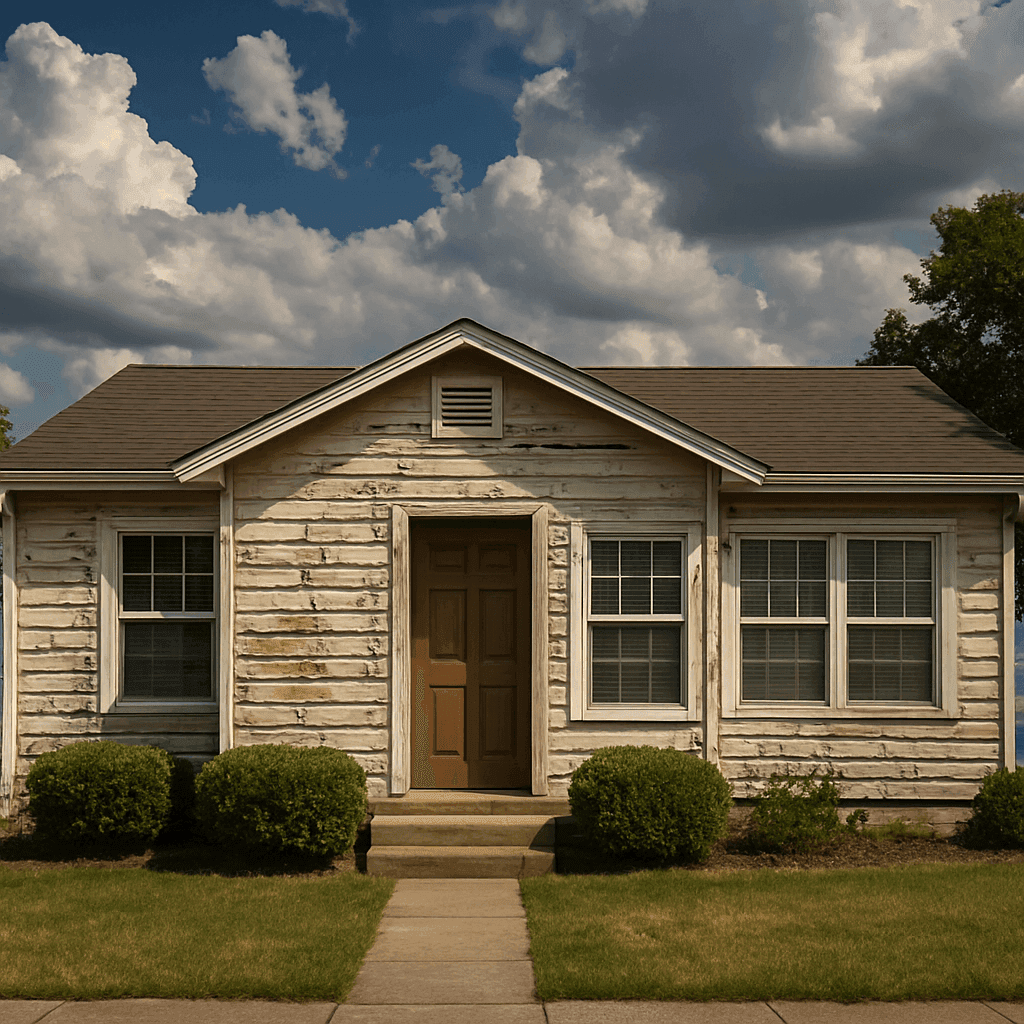
Chalky residue that rubs off the surface, noticeable color fading (especially on south and west-facing walls that get the most direct sun), and eventually surface cracking as the paint film becomes brittle.
What helps:
Premium exterior paints contain UV-stabilized pigments and tougher binder resins that resist UV breakdown longer than budget products. Lighter colors also absorb less UV radiation and tend to hold their appearance longer than darker tones. A well-applied exterior paint job using quality products should carry you through the full 5–7 year repaint cycle in Houston — even under intense sun, and longer on shaded walls.
2. Humidity and Moisture Vapor
Houston's relative humidity stays above 70% for much of the year. This constant moisture presence affects exterior paint in several ways:
- •Adhesion during application: Paint applied when humidity is too high doesn't form a proper bond with the substrate. An experienced Houston painter checks humidity levels and surface moisture readings before starting each day's work.
- •Moisture vapor transmission: In warm, humid conditions, moisture vapor moves through walls from the inside out. This vapor pressure pushes against the paint film from behind, eventually causing it to bubble and peel — a process called "vapor blistering."
- •Mildew growth: Warm, humid air combined with any surface moisture gives mildew exactly what it needs to colonize paint surfaces. Mildew doesn't just look bad — it degrades the paint film over time.
What helps:
Mildew-resistant paint additives, proper surface preparation including thorough pressure washing and mildewcide treatment, and using a painter who understands humid-climate application conditions.
3. Heavy Rain and Storm Cycles
The greater Houston area averages over 50 inches of rainfall per year — well above the national average. Heavy rain events, particularly the intense storms common in spring and early fall, send large volumes of water against your home's exterior in a short time.
What this does to paint:
- • Leaches through caulk failures. Every gap around a window frame, door, or trim board that isn't properly caulked becomes an entry point during heavy rain.
- • Saturates wood and masonry. Repeated wetting and drying cycles cause wood to expand and contract, which stresses the paint film over it.
- • Tests low-lying areas. Fascia boards, the base of siding panels, and any painted surface close to the roofline or soil level takes the most punishment.
What helps:
Quality caulking on all joints and penetrations, regular inspection after storm seasons, and prompt attention to any areas where caulking is pulling away or cracking.
4. Temperature Swings and Thermal Expansion
While Houston winters are mild compared to most of the country, the area still experiences meaningful temperature swings — from freezing nights in January to 90-degree days by April. These swings cause materials to expand and contract, and any paint film over those materials has to move with them.
Paint films are somewhat flexible, but they have limits. Over repeated cycles of expansion and contraction, paint that's aged and lost its flexibility begins to crack. This is especially visible on wood trim boards, stucco surfaces, and south-facing walls.
What helps:
Premium paint products with higher flexibility and elongation properties handle thermal movement better than cheaper alternatives. Stucco repair on cracked surfaces before repainting prevents moisture infiltration from making the problem worse.
How Houston Weather Compounds Over Time
The real problem isn't any one of these factors — it's that they all work together. A paint film that's been weakened by UV exposure is less able to resist moisture intrusion. Moisture that gets behind peeling paint creates conditions for mildew. Mildew-compromised paint is more brittle. And brittle paint cracks under temperature stress.
This is why deferred maintenance on exterior paint in Houston becomes expensive quickly. What starts as noticeable fading turns into chalking, which turns into cracking, which turns into peeling, which turns into moisture damage, which can eventually reach the structural components of your home.
The good news is that the cycle is easy to interrupt early — a scheduled repaint at the right time, done right, resets the clock.
What "Done Right" Looks Like in Houston's Climate
Knowing the weather conditions your paint has to survive should inform what you look for in a painter. In a climate like Greater Houston's, the right approach includes:
Application only in appropriate conditions — no painting when humidity is above manufacturer-recommended thresholds
Full pressure washing to remove chalk, mildew, and surface contamination before any paint goes on
Thorough caulking of all joints, gaps, and penetrations — not just the obvious ones
Priming on bare wood, repaired spots, and stucco before finish coats are applied
Two full coats of a quality exterior paint selected for high-UV, high-humidity conditions
Mildew-resistant products on all surfaces, not just the obvious problem areas
If you're in Katy, Cypress, Sugar Land, The Woodlands, or anywhere in the Houston metro, these aren't premium extras — they're the baseline for a paint job that will actually last, and they're included in every quote for our exterior painting in Houston. Our exterior house painting cost guide shows what that prep adds to a 2026 quote.
Signs Houston Weather Has Already Damaged Your Exterior Paint
Watch for these on your own home:
Chalking
Run your hand across the surface. If it comes away with a fine powder, the paint's binder is breaking down.
Peeling or flaking
Especially on south/west walls, near rooflines, or around windows.
Mildew stains
Dark, patchy discoloration on shaded or north-facing surfaces.
Bubbling
Small raised areas in the paint film, often near moisture sources.
Cracking
Fine hairline cracks or larger alligatoring patterns, particularly on trim.
Fading
Color that's noticeably different from when you painted — or dramatically different from one side of the house to the other.
Any of these is a signal worth acting on. Early intervention is almost always less expensive than waiting.
Frequently Asked Questions
How often should I repaint my home's exterior in Houston?
In the Greater Houston area, most homes benefit from a professional exterior repaint every 5–7 years. Homes with significant sun exposure, older paint layers, or deferred maintenance may need attention sooner. An annual walkthrough of your exterior for early warning signs can help you time a repaint before major damage occurs.
Why does paint peel so quickly on Houston homes?
Peeling usually results from moisture intrusion behind the paint film — either from inadequate prep work (skipped pressure washing, missed caulk gaps) or from the natural vapor pressure that Houston's humidity creates. In many cases, it's a combination of both.
Can Houston humidity prevent paint from drying properly?
Yes. Paint applied when ambient humidity exceeds the manufacturer's recommended threshold won't cure correctly. The film may appear dry but will have weak adhesion and be prone to early failure. A qualified painter monitors conditions before and during application to avoid this.
What is the best exterior paint for Houston's climate?
Look for exterior paints formulated for high-humidity, high-UV environments — products with mildew-resistant additives, UV-stabilized pigments, and flexible binders that handle thermal expansion. Premium product lines from major manufacturers typically outperform budget alternatives significantly in Houston's conditions.
Is pressure washing my house before painting really necessary?
Absolutely. Painting over a surface with chalk residue, dirt, or mildew results in adhesion failure — it's one of the leading causes of premature paint peeling in the Houston area. Pressure washing is a required step, not an optional add-on.
Protect Your Houston Home's Exterior This Season
The longer you wait once paint starts failing, the more damage works its way into the surfaces underneath. We'd be happy to assess your home and give you an honest picture of where things stand. No pressure, no sales pitch — just a straightforward look at what your home needs.
Related Articles
Exterior Painting in Cypress TX: Common Problems Homeowners Face
Cypress TX homeowners face unique exterior paint problems. Here's what causes them and how to protect your home.
Houston Painting Cost Guide 2026
Complete pricing breakdown for interior, exterior, and cabinet painting in the Houston area.