If you've owned a home in Cypress TX for more than a few years, there's a good chance you've noticed something off with your exterior paint — maybe a section that's bubbling near the roofline, peeling trim around the garage, or a color that's faded unevenly from one side of the house to the other. You're not imagining it, and you're not alone.
Exterior painting in Cypress TX comes with challenges that homeowners in drier parts of the country simply don't face. Between the summer heat, the humidity that hangs around from April through October, and the heavy rain cycles that come with Gulf Coast weather, your home's exterior is getting worked on constantly — even when it doesn't look like it.
This guide covers the most common exterior paint problems Cypress homeowners run into, what's actually causing them, and what to do about it before small issues turn into expensive repairs.
Why Cypress TX Is Especially Hard on Exterior Paint
Cypress sits just northwest of Houston proper, and it gets the full force of what Gulf Coast weather delivers. Summers regularly push past 95 degrees, and the humidity makes it feel hotter than that. But it's not just the heat — it's the combination of conditions that wears paint down faster here than in most other parts of the country.
Intense UV Radiation
Long summer days break down pigment and binder in paint films
75%+ Humidity
Prevents paint from fully curing and invites mildew growth
Heavy Rain Cycles
Spring and fall rains test every caulk joint and painted surface
Temperature Swings
Seasonal changes cause expansion and contraction in wood and masonry
That's a tough environment for any coating. And when the paint fails, the problems underneath — moisture intrusion, wood rot, failing caulk — can get expensive fast.
The Most Common Exterior Paint Problems in Cypress TX
Peeling and Flaking Paint
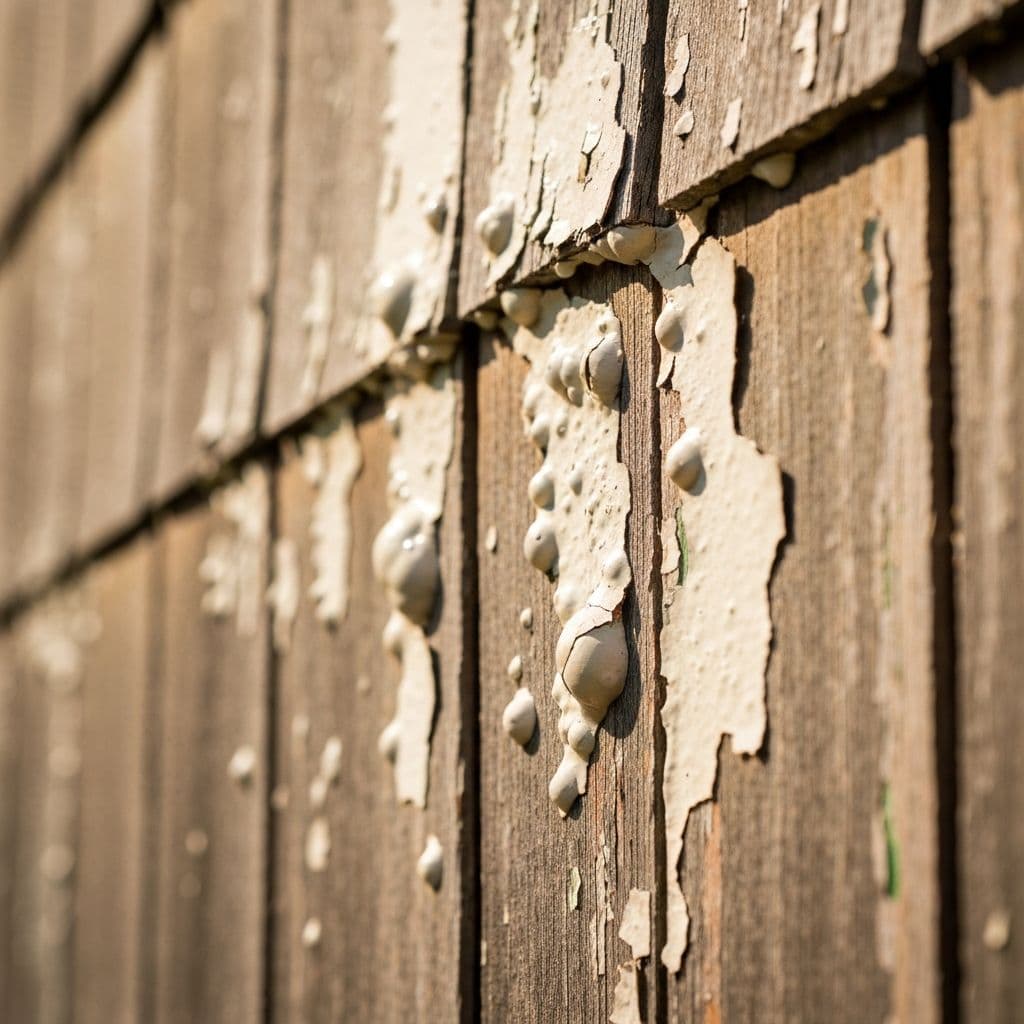
Peeling is probably the most visible exterior paint problem Cypress homeowners see, and it almost always comes down to one of three causes: moisture getting behind the paint film, improper surface prep before the last paint job, or a paint product that wasn't suited for the conditions.
In humid climates like ours, moisture vapor moves through walls and can push against paint from the inside out. You'll often notice peeling first on the south or west side of the house — the sides that get the most sun exposure and temperature stress.
If you see peeling starting, don't ignore it. Once paint lets moisture in, the damage compounds quickly. A professional exterior painting contractor in Cypress will scrape the failing sections, prime the bare areas, and apply a quality product designed to flex and breathe in high-humidity conditions.
Mildew and Mold Growth on Paint
That dark, patchy discoloration you're seeing on north-facing walls or in shaded areas near the roofline? That's mildew — and it's extremely common in Cypress. Shaded areas stay damp longer, and warm humid air gives mildew exactly what it needs to grow.
The fix isn't just repainting over it. Painting over active mildew traps it under the new coat, and it will come back through within months. The surface needs to be cleaned with a proper mildewcide solution and pressure washed thoroughly before any new paint goes on.
If mildew is a recurring problem on your home, ask about paint products with built-in mildew-resistant properties. Combined with good pressure washing maintenance, these can significantly reduce how often the problem returns.
Chalking
Run your hand across the exterior of an older Cypress home and you might notice it comes away with a chalky, powdery residue. That's called chalking, and it's a normal sign that exterior paint is reaching the end of its life.
Chalking happens as UV light breaks down the binder that holds paint together. As the binder degrades, the pigment particles release as a fine dust on the surface. Some chalking is normal in aging paint, but heavy chalking means the paint's protective barrier is nearly gone — and repainting is overdue.
Before painting over a chalky surface, it needs to be pressure washed to remove as much chalk as possible. Painting over a heavy chalk layer leads to adhesion failure.
Fading and Uneven Color
Cypress homeowners often notice that paint fades faster on the south and west sides of their homes — the walls that take the most direct sun. This is especially common with darker paint colors, which absorb more UV radiation.
Fading is largely unavoidable in a climate like ours, but the right paint products can slow it significantly. Quality exterior paints with UV-resistant pigments and higher-grade resins hold their color noticeably longer. When a painter offers you a choice between a builder-grade paint and a premium product, the difference in UV resistance is a real reason to invest in the better option.
If your home's color looks dramatically different from one side to the other, it's worth addressing before the faded sides become a visual eyesore — or an HOA conversation you'd rather not have.
Bubbling and Blistering
Bubbles in exterior paint are a telltale sign that something got trapped between the paint film and the surface underneath. In Cypress, this is usually moisture — either from a surface that wasn't fully dry when painted, or from humidity getting behind the film after the fact.
Painting in the wrong conditions is a common cause. If a surface is painted when temperature or humidity is outside the recommended range, the paint cures improperly and blistering follows. An experienced local painter knows to check conditions before starting each day's work — not just what the forecast says, but what the actual surface temperature and moisture readings are.
Blistered paint needs to be scraped, the underlying cause addressed, and the area reprimed and repainted properly.
Cracking and Alligatoring
"Alligatoring" is that pattern of cracks that looks like reptile scales — usually seen on older homes where multiple layers of paint have built up over the years. It happens when the top coat dries faster than the coat underneath, or when incompatible paint types have been layered on top of each other.
On Cypress homes with wood trim or older siding, you may also see straight-line cracking as the wood expands and contracts through seasonal temperature changes. This is especially common on trim boards, windowsills, and fascia.
Areas with alligatoring or significant cracking generally need to be fully stripped back to bare substrate before repainting. It's more labor-intensive than a standard repaint, but it's the only way to get a finish that will actually last.
How to Protect Your Cypress TX Home's Exterior Paint Longer
You can't stop the weather, but you can slow down how fast it affects your paint:
- Touch up chips and cracks annually. Small compromises in the paint film let moisture in and get bigger fast. Catching them early is much cheaper than waiting.
- Keep gutters clean. Overflowing gutters direct water against your fascia and siding, accelerating paint failure on those surfaces.
- Trim vegetation away from siding. Shrubs and trees holding moisture against your home's exterior create ideal conditions for mildew.
- Schedule a pressure wash every 1–2 years. Dirt and mildew spores act as a moisture trap on paint surfaces. Regular pressure washing extends the life of your paint job noticeably.
- Address caulk failures quickly. When caulk around windows and doors starts pulling away, water gets behind the siding. Recaulking is inexpensive; water damage is not.
When It's Time to Stop Patching and Just Repaint
There's a point where touching things up doesn't make sense anymore. If your home is showing widespread peeling, significant mildew growth, heavy chalking, or fading across multiple elevations, a full exterior repaint is likely more cost-effective than a series of spot repairs.
A good rule of thumb:if more than 25–30% of any wall surface is showing paint failure, it's time to repaint the whole elevation rather than patch it. Partial repaints rarely match in color and sheen, and they don't address the underlying surface condition.
Most Cypress homes benefit from a professional exterior paint job every 5–7 years. If your home is in that window, it's worth having a professional assess the current condition before problems worsen. Our exterior painting in Houston and Cypress includes the wash, scrape, caulk, and primer that stop these problems, and the exterior house painting cost guide shows what a Cypress repaint typically runs.
Looking for help with interior painting in Cypress too? We handle that as well.
Frequently Asked Questions
Why is my exterior paint peeling so fast in Cypress TX?
Peeling is usually caused by moisture intrusion, improper prep work before the last paint job, or a paint product that isn't suited to high-humidity conditions. In Cypress, moisture behind the paint film is the most common culprit.
How do I get rid of mildew on my home's exterior before repainting?
Mildew must be treated with a mildewcide cleaning solution and pressure washed before painting. Painting over active mildew will cause it to bleed through the new coat within months.
How often should I repaint my home's exterior in Cypress TX?
Most Cypress homeowners should plan on a professional exterior repaint every 5–7 years, depending on the paint products used, the home's sun exposure, and how well the surface has been maintained between paint jobs.
What causes paint to bubble on the outside of a house?
Bubbling or blistering is almost always caused by moisture — either trapped under the paint during application or getting behind the film afterward. It can also result from painting in high-humidity conditions that prevent proper curing.
Should I use mildew-resistant paint in Cypress TX?
Yes. Given the humidity levels in Cypress and the rest of the Greater Houston area, mildew-resistant exterior paint products are worth the investment. They won't prevent mildew entirely, but they slow its growth significantly compared to standard formulas.