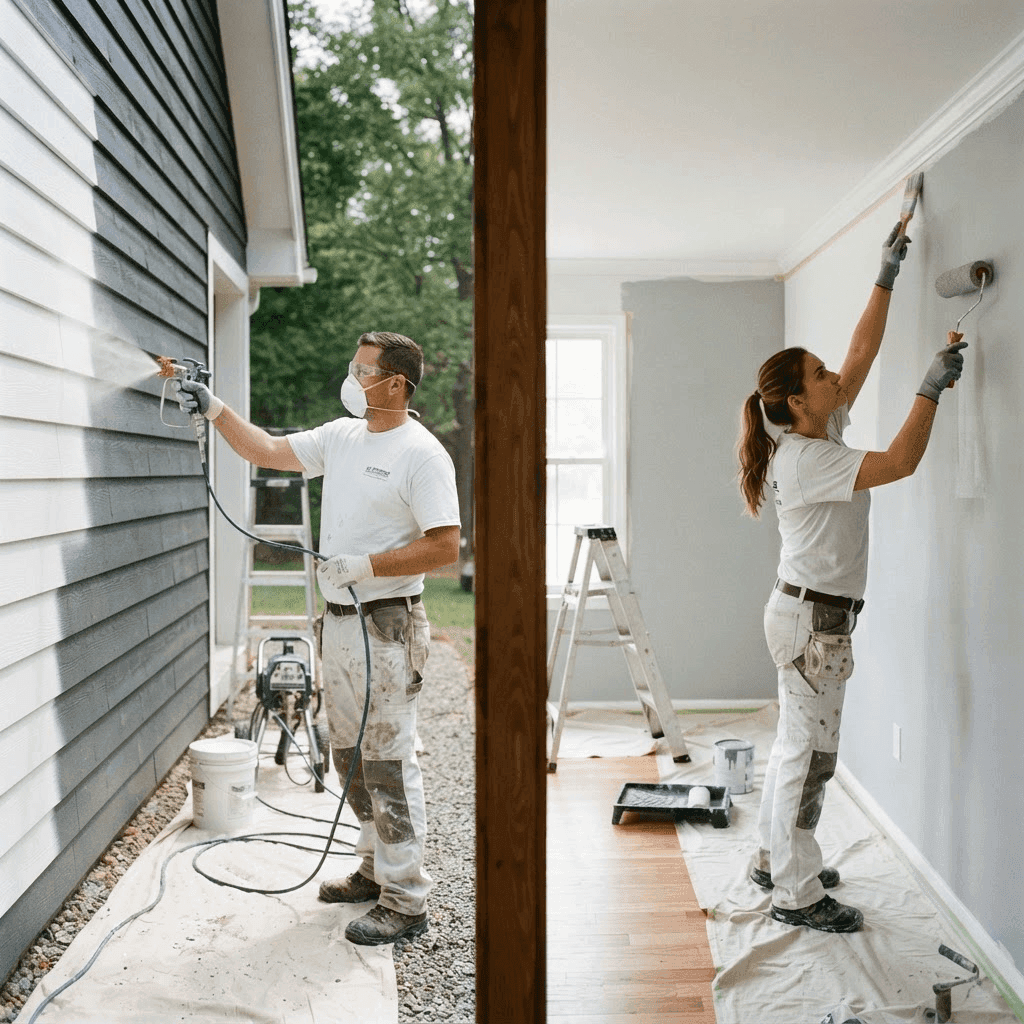
"Are you going to spray it or roll it?" It's one of the first questions Houston homeowners ask, and there's a lot of confusion out there. Some people think spraying is a shortcut low-quality painters use; others think it's automatically the premium option. The truth is that both are professional techniques — they just belong on different surfaces.
After years of painting homes across Houston, here's how we actually decide, surface by surface.
The Quick Answer
Spray cabinets, trim, doors, and textured exteriors for a smooth, efficient finish. Brush and roll interior drywall walls in occupied homes for adhesion and easy cleanup. The best painters combine methods — and often "back-roll" sprayed exteriors to lock the coating into the surface.
How Spraying Works — and Where It Shines
Spraying atomizes paint into a fine mist through an airless sprayer, laying down an even film with no brush marks or roller stipple. It's fast and produces the smoothest possible finish. Spraying is the clear winner for:
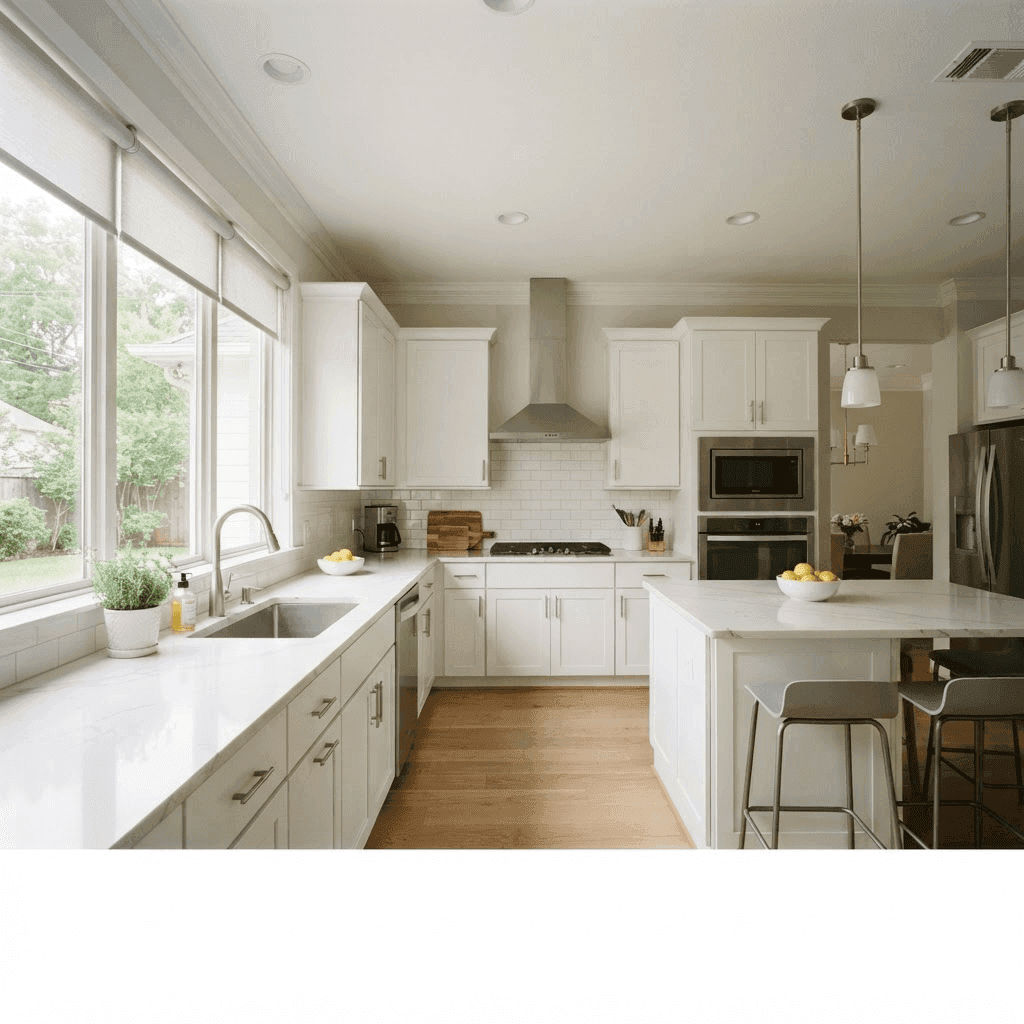
- Kitchen cabinets: that factory-smooth, glass-like finish is nearly impossible to match with a brush
- Trim, doors, and millwork: smooth, drip-free, and fast
- Textured exteriors: stucco, brick, and fiber-cement siding with lots of surface texture
- Empty new-construction interiors: nothing to mask, so speed wins
The trade-off is preparation. Spraying requires masking off everything you don't want painted, because overspray drifts. In an occupied home that masking can take longer than the painting itself.
How Brush and Roll Works — and Where It Wins
Brushing and rolling physically presses paint into the surface. That mechanical contact builds a strong bond and a slight texture that hides minor imperfections. Brush and roll is the right call for:
- Interior drywall walls in lived-in homes: minimal masking, durable finish, easy touch-ups
- Accent walls and small rooms: fast setup without tenting off the space
- Touch-ups and repaints: blends into existing rolled surfaces
- Detailed cut-in work: around windows, corners, and fixtures
For most interior repaints in a home you're living in, brush and roll is simply more practical — you don't want a fine mist of paint drifting toward your floors, furniture, and belongings.
The Best of Both: Back-Rolling
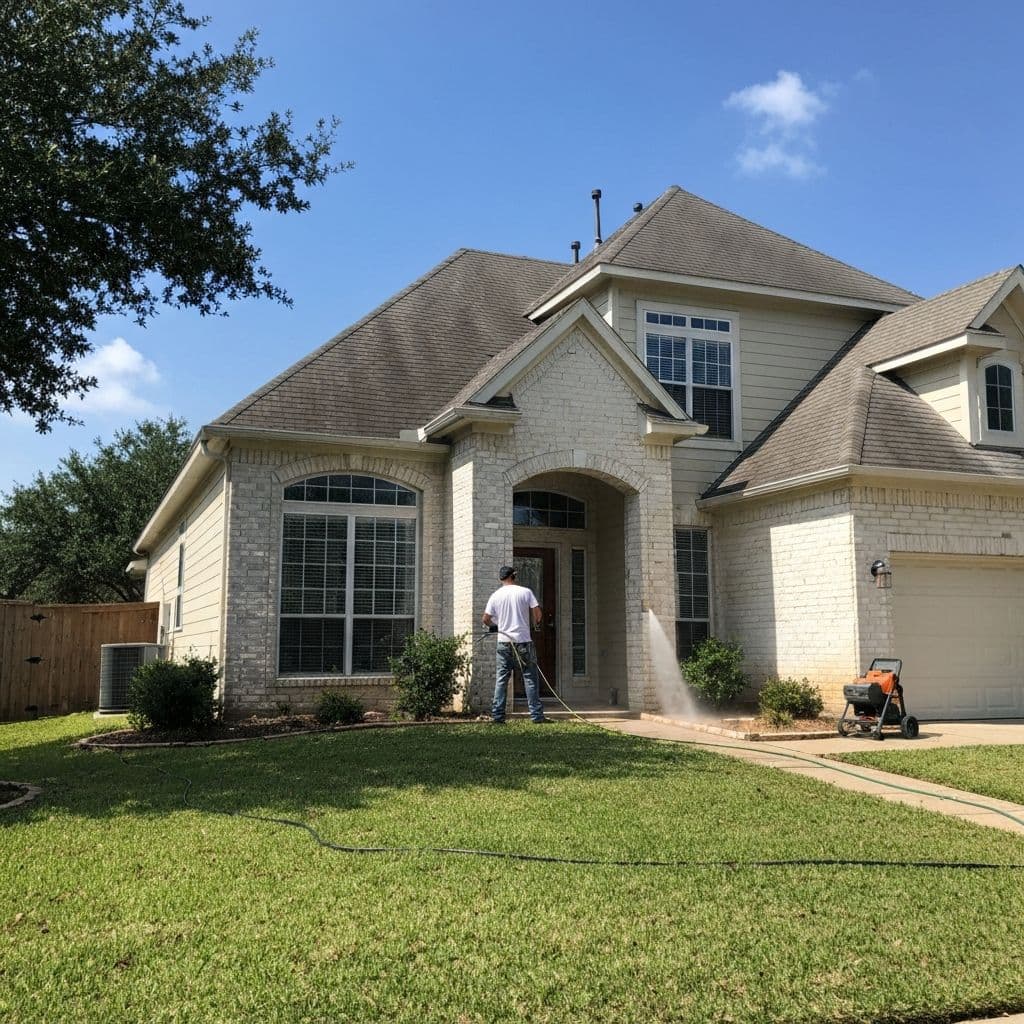
On Houston exteriors, we often spray and back-roll. One painter sprays the coating on quickly while a second immediately rolls over it. You get the speed and coverage of spraying plus the deep adhesion of rolling — the paint gets worked into every pore of the stucco or siding.
This matters a lot in our climate. Between UV exposure, humidity, and driving rain, exterior coatings in Houston take a beating. The better the paint is bonded to the surface, the longer it lasts — which is why prep and technique matter as much as the product you choose.
Does the Method Change the Price?
Sometimes. Spraying uses 20–40% more paint due to overspray, but it can save labor on large or detailed surfaces. Brush and roll uses less material but more time on big areas. A good painter chooses the method that delivers the best result for your specific surfaces — not the one that's fastest for them.
What We Recommend
Don't choose a painter based on whether they spray or roll. Choose one who can explain why they're using each method on your project. On a typical Houston home, we might spray the cabinets and trim, brush and roll the interior walls, and spray-and-back-roll the exterior — all on the same job.
Want a clear plan for your home? See our interior and exterior painting services, or request a free estimateand we'll walk you through exactly how we'd approach each surface. Application method rarely changes the bottom line much; typical prices are in our Houston painting cost guide, and crews run out of all five offices, including our painters in Magnolia TX.
Frequently Asked Questions
Is spraying or rolling better for painting a house?
Neither is universally better — they solve different problems. Spraying is faster and gives the smoothest finish on cabinets, trim, doors, and textured exteriors. Brush and roll pushes paint into the surface for maximum adhesion and is ideal for drywall walls and touch-ups. Most quality jobs use a combination, often called back-rolling, to get the best of both.
Do professional painters spray or roll interior walls?
For occupied homes, most pros brush and roll interior walls. It produces a durable finish, requires far less masking, and avoids overspray on your floors and furniture. Spraying interior walls mainly makes sense in empty new-construction homes where speed matters and there's nothing to protect.
Should kitchen cabinets be sprayed or brushed?
Cabinets should be sprayed whenever possible. Spraying a cabinet-grade enamel gives that factory-smooth, brush-mark-free finish that makes painted cabinets look professionally done. A skilled painter can brush cabinets acceptably, but spraying is the gold standard.
Does spraying use more paint than rolling?
Yes. Spraying typically uses 20–40% more paint than rolling because of overspray and the fine mist that doesn't land on the surface. That extra material cost is often offset by labor savings on large or highly detailed surfaces.
What is back-rolling and why does it matter in Houston?
Back-rolling means spraying paint on and immediately rolling over it while wet. It combines the speed of spraying with the adhesion of rolling, working the paint into porous surfaces like stucco and fiber-cement siding. In Houston's humidity and sun, that deep adhesion helps exterior coatings last longer.
Owner, Houston Superior Painting
Juan Serra founded Houston Superior Painting in 2019 and runs it from the company's Cypress headquarters, with five offices serving Greater Houston. He reviews the prep scope on every estimate.
Ready to Transform Your Home?
Get a free estimate from Houston Superior Painting. We bring local expertise and quality craftsmanship to every project.