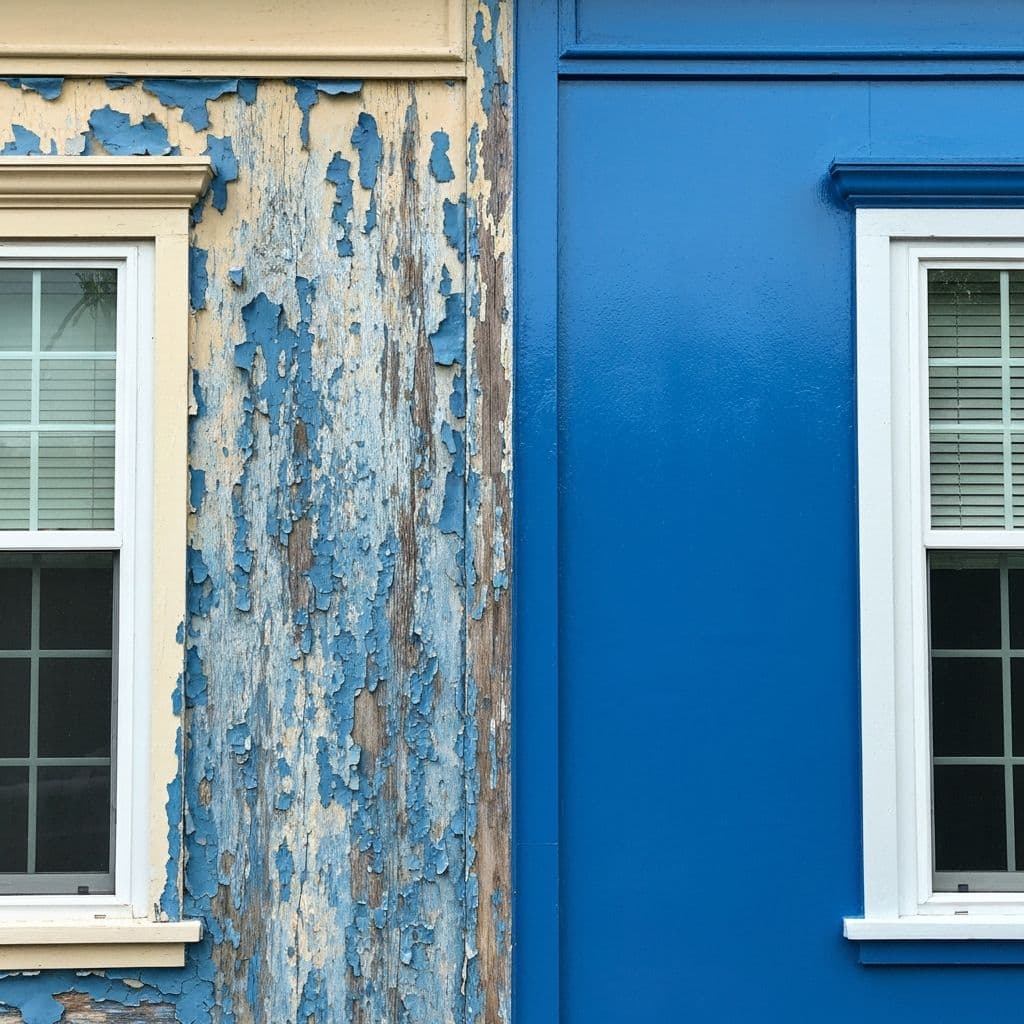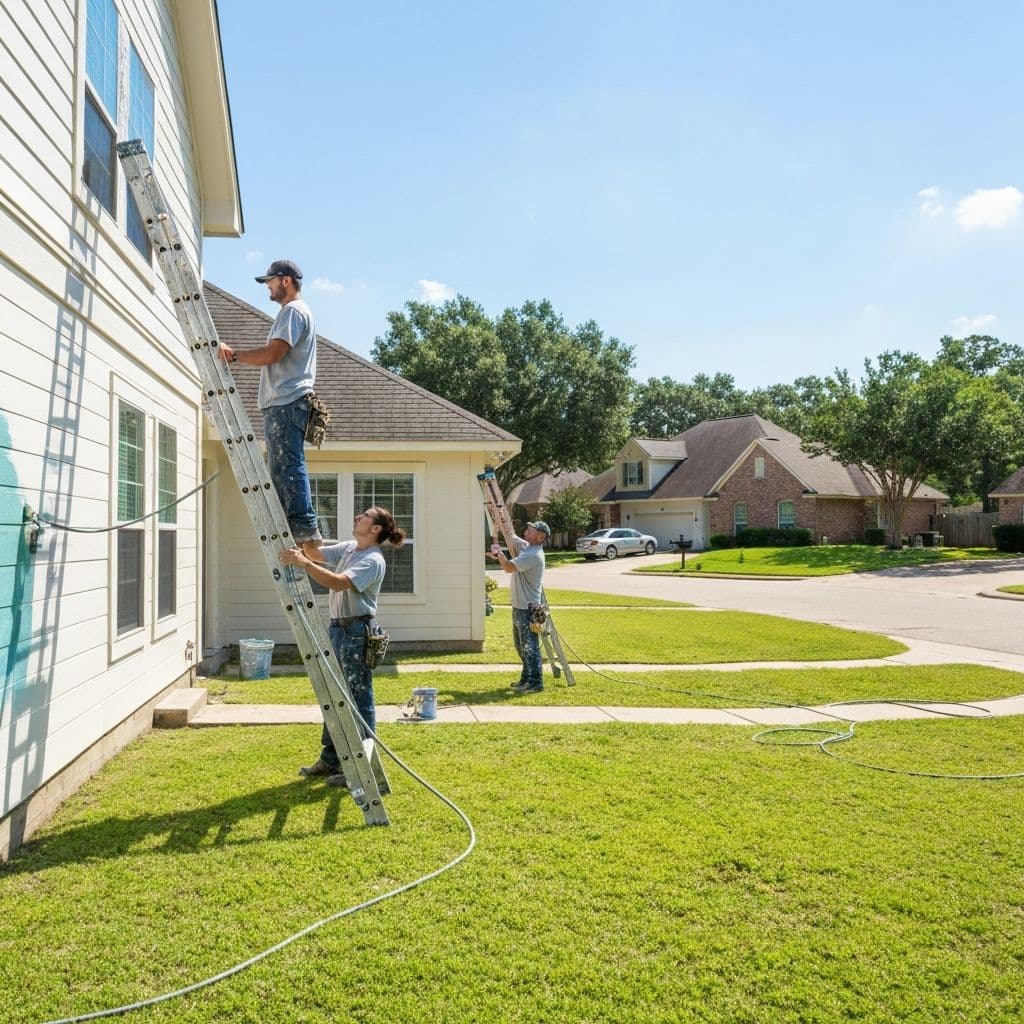
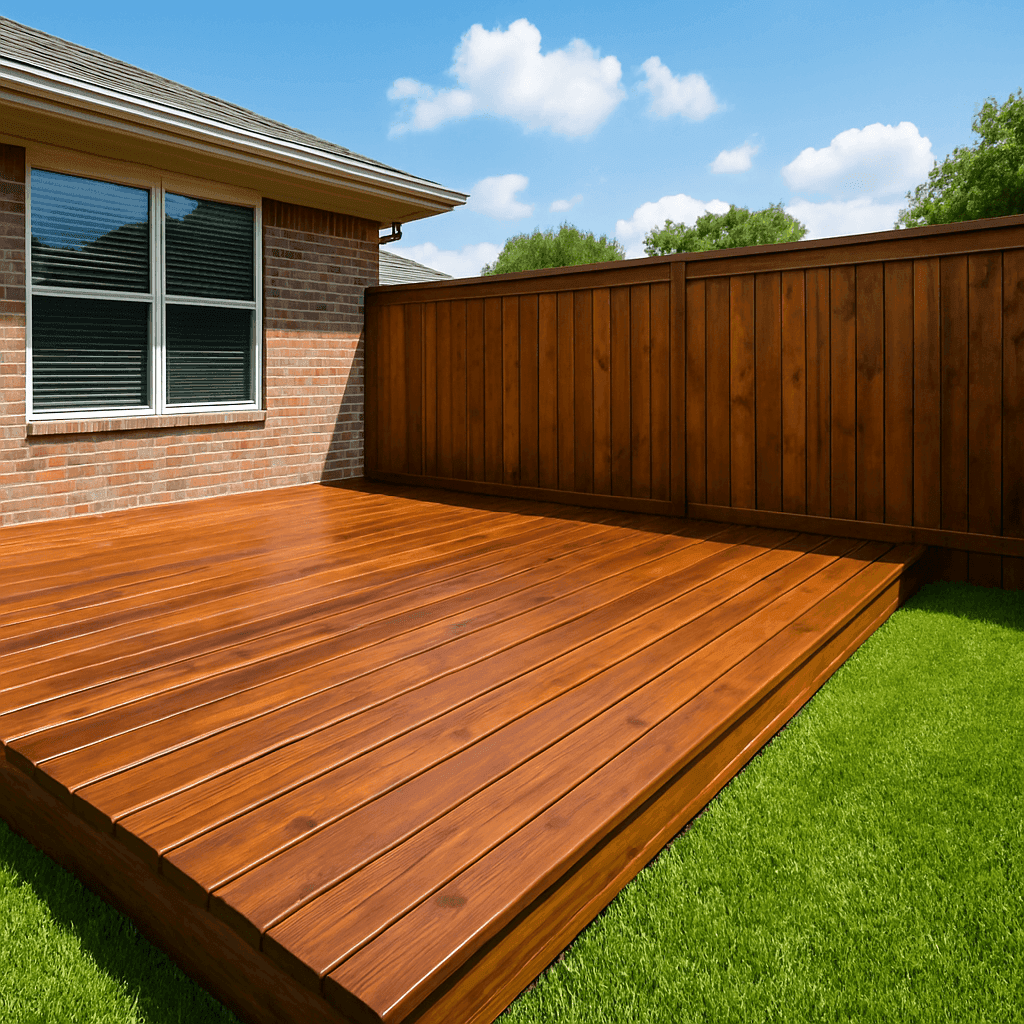
Wood fences and decks in the greater Houston area age faster than most homeowners expect — and it's not a mystery why. The combination of intense UV exposure, high humidity, and frequent rainfall that makes our climate challenging for exterior paint on a house is even more demanding on horizontal decking surfaces and exposed fence boards. Water doesn't just run off these surfaces — it sits, soaks, and cycles through the wood in a way that accelerates deterioration significantly.
The good news is that a properly maintained painted or stained fence and deck holds up remarkably well in Houston's climate. The key is knowing which products to use, how to prep correctly, and how often to recoat.
Paint vs. Stain: Which Is Right for Your Houston Fence or Deck?
This is the first decision — and it shapes everything that follows.
Paint for Fences
Paint is a common choice for wood privacy fences, particularly in Houston suburban communities where the fence is visible from the street or where HOA standards call for a consistent appearance.
Advantages of paint on fences:
- Solid, opaque coverage that hides wood grain and previous stains
- Available in any color — useful when matching a home's exterior palette
- Higher hiding power for older, weathered, or inconsistently colored wood
- Easier to maintain a consistent appearance across multiple fence sections
Disadvantages:
- Paint traps moisture in wood more readily than penetrating stains — in Houston's wet climate, this can lead to peeling and blistering if prep isn't thorough
- Requires more prep when recoating because old paint must be in good condition or removed
- Surface imperfections become more visible under paint than under stain
Best approach: A quality exterior latex paint or an acrylic enamel with mildew resistance. Proper prep — cleaning, sanding rough areas, and priming — is essential on fences because they see significant UV and moisture cycling.
Stain or Sealant for Decks
For horizontal decking, paint is almost never the recommended choice in Houston. Here's why: horizontal surfaces collect water. Water that sits on painted decking penetrates through any imperfection in the paint film, gets trapped beneath it, and causes the paint to peel from the inside out. In Houston's rain-heavy climate, peeling painted decks are an extremely common maintenance headache.
Stains and sealers are designed for decking specifically because they penetrate the wood rather than forming a film on top. Moisture can move through a stained deck surface, dry out, and move through again without creating the peel-and-trap cycle that plagues painted decks.
- Solid-color deck stain: Looks similar to paint but penetrates the wood rather than forming a surface film. Best for older decks with inconsistent appearance or surface imperfections. Still requires good prep but holds up better than paint in Houston conditions.
- Semi-transparent deck stain: Allows some wood grain to show through while providing UV protection and moisture resistance. Best for newer decking or pressure-treated wood in good condition. More natural appearance.
- Clear sealant: Primarily moisture resistance with minimal UV protection. Not recommended for Houston decks in full sun exposure — UV breaks down untreated wood quickly even if moisture is addressed.
Houston-Specific Factors That Affect Fence and Deck Coatings
Pressure-Treated Wood
Most Houston area fences and decks are built with pressure-treated (PT) lumber. This wood is infused with preservatives that protect against rot and insects, but those preservatives also need to dry out of the wood before any coating is applied. New PT wood should be allowed to weather for 6 months to a year before painting or staining — applying finish too soon leads to adhesion failure as the preservatives migrate to the surface.
You can test PT wood readiness with a simple water test: sprinkle water on the surface. If it beads up, the wood isn't ready to accept a coating. If it absorbs into the surface, the wood has dried sufficiently.
Houston's UV Exposure
The UV index in Houston during summer months is extreme. Any coating without UV-stabilizing properties will break down quickly on a south or west-facing fence or deck — sometimes in a single Houston summer. Look specifically for products with UV inhibitors in the formulation, not just moisture resistance.
Mildew on Shaded Surfaces
Fences and decks with overhead tree cover or that sit in partial shade are particularly susceptible to mildew growth in Houston. The combination of shade (that keeps surfaces damp) and our warm, humid air is perfect for mildew. Products with mildewcide additives — or pre-treatment with a mildewcide solution before coating — are important for shaded fence and deck surfaces.
Sprinkler Systems
Many Houston suburban homes have irrigation systems that regularly wet the base of fence boards or the underside of decking. Consistent wetting from irrigation dramatically accelerates paint and stain failure at the base of fence boards. If you're having fence boards repainted, check whether your irrigation schedule is directing water onto the fence regularly — adjusting sprinkler heads can meaningfully extend the life of your next coating.
Prep Is Everything — Especially in Houston
As with exterior house painting, prep determines how long a fence or deck coating lasts in our climate. The steps that cannot be skipped:
- Cleaning.A fence or deck that's been sitting for more than a year has accumulated mildew, algae, dirt, and grayed UV-damaged wood fibers on its surface. A thorough cleaning — typically with a deck cleaner or oxalic acid brightener, applied and rinsed — removes these and opens the wood grain for better product penetration.
- Pressure washing.Follows the cleaning solution. Care is needed — excessive pressure on older or softer wood can raise the grain and create a fuzzy surface that's harder to coat evenly.
- Dry time.Wood that's been cleaned and pressure washed needs to dry completely — typically 48–72 hours in Houston conditions — before any coating is applied. This is a commonly rushed step.
- Sanding. Rough or splintered surfaces should be sanded smooth before coating. This is especially important on deck surfaces that people walk on — both for safety and for finish appearance.
- Priming (for paint applications). Bare wood going under paint benefits from a primer coat that penetrates and seals before the finish coat. On fences, this is especially important at cut ends where moisture penetrates most readily.
How Often to Repaint or Restain Houston Fences and Decks
Given Houston's climate demands, expect these maintenance intervals with proper prep and quality products:
| Surface & Coating | Recoat Interval |
|---|---|
| Painted fences | Every 3–5 years (annual touch-ups extend this) |
| Stained fences | Every 2–4 years depending on product and sun exposure |
| Stained decks | Every 2–3 years for most Houston decks |
These intervals shorten without proper prep and lengthen with annual maintenance (touch-ups, cleaning, addressing caulk and sealant failures at the perimeter). Horizontal surfaces take more wear than vertical — sun exposure, foot traffic, and furniture all contribute to faster breakdown on decks.
Deck Staining Cost in Houston
Deck staining in Houston typically runs $1–$3 per square foot for application, plus additional cost for prep if the deck needs cleaning, sanding, or brightening before coating.
| Deck Size | Typical Staining Cost |
|---|---|
| 200 sq ft | $200–$600+ |
| 400 sq ft | $400–$1,200+ |
| 600 sq ft | $600–$1,800+ |
Final pricing depends on prep requirements, product selected, and the deck's current condition.
When to Hire a Professional vs. DIY
Fence and deck painting and staining is one of the more approachable DIY exterior projects — the prep is straightforward, the application is more forgiving than house painting, and the consequences of minor technique variations are less visible than on a home's primary surfaces.
That said, professional results are consistently better — particularly for larger deck surfaces, two-story fences, or when the existing condition requires significant prep. A professional crew with spray equipment applies product faster, more evenly, and with better back-brush technique (working product into the wood grain) than most DIY roller applications.
For homeowners with significant fence runs or deck square footage, the time savings of professional application — and the quality of the result — often justify the cost over DIY. For smaller projects in good condition, a motivated homeowner with the right products and adequate dry time between prep and application can do well.
Ready to Get Your Houston Fence or Deck Protected?
At Houston Superior Painting, we apply the same preparation standards to fences and decks that we bring to every exterior project. In Houston's climate, prep is what determines how long the coating lasts — and we're not in the business of doing work twice. Request your free estimate and we'll recommend the right paint or stain system for your fence and deck.
Frequently Asked Questions
Should I paint or stain my deck in Houston TX?
Stain is almost always the better choice for horizontal deck surfaces in Houston. Paint traps moisture under the film, leading to peeling in our wet climate. A solid-color or semi-transparent deck stain penetrates the wood and allows moisture movement without the peel-and-trap cycle.
How long does fence paint last in Houston TX?
With proper prep and quality exterior paint, a painted wood fence in Houston typically lasts 3–5 years before needing a full repaint. Sun exposure, sprinkler contact, and shaded/mildew-prone sections all affect that timeline.
Can I paint a new pressure-treated wood fence right away?
No — new pressure-treated wood needs to dry for 6 months to a year before accepting a coating. The preservatives in new PT lumber prevent paint and stain adhesion until they've migrated and dried from the surface. Test with a water drop: if it beads, the wood isn't ready.
What's the best paint or stain for a Houston deck?
A high-quality solid-color or semi-transparent deck stain with UV inhibitors and mildewcide is the best choice for most Houston decks. Products from premium lines like Cabot, TWP (Total Wood Preservative), or Armstrong Clark are well-regarded for high-humidity, high-UV climates. Your painting contractor can recommend specific products for your deck's current condition.
How much does deck staining cost in Houston TX?
Deck staining in Houston typically runs $1–$3 per square foot for application, plus additional cost for prep (cleaning, sanding, brightening) if needed. A 400 square foot deck might run $400–$1,200+ depending on prep requirements and product used.
JJ Semo
Owner & Lead Estimator at Houston Superior Painting
JJ founded Houston Superior Painting in 2019 and has completed over 500 residential and commercial painting projects across the Greater Houston area. He specializes in helping homeowners choose the right colors and finishes for Houston's unique climate.
Ready to Transform Your Home?
Get a free estimate from Houston Superior Painting. We bring local expertise and quality craftsmanship to every project.